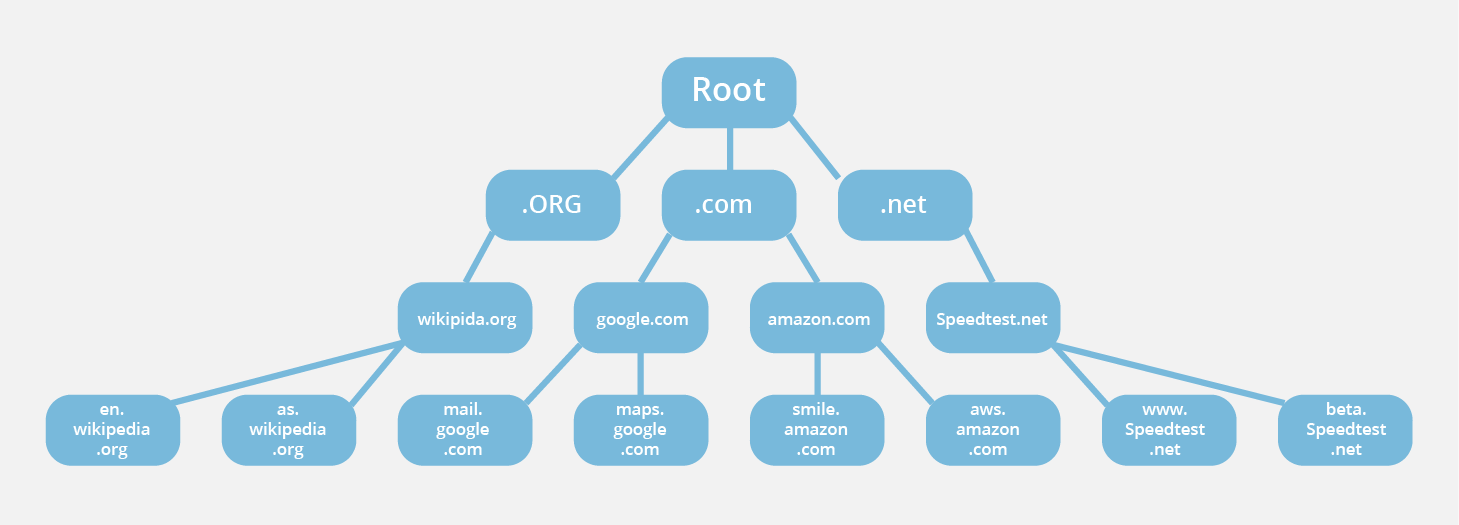
DNS: Notes

DNS Root Servers

Domain Name System

DNS uses UDP port 53 as default and TCP port 53 as fallback.

nslookup

nslookup -type=txt youtube.com
nslookup -type=mx google.com

dig

dig youtube.com txt

host - DNS lookup utility

host -t txt google.com

Check PTR text record

PS C:\Users\Administrator> nslookup -type=ptr 173.82.240.78
Server:  UnKnown
Address:  2402:800:20ff:6666::1

Non-authoritative answer:
78.240.82.173.in-addr.arpa      name = mx2.practicehabits.net
PS C:\Users\Administrator>

Check DMARC text record

PS C:\Users\Administrator> nslookup -type=txt _dmarc.practicehabits.net
Server:  UnKnown
Address:  2402:800:20ff:6666::1

Non-authoritative answer:
_dmarc.practicehabits.net       text =

        "v=DMARC1; p=reject; rua=mailto:postmaster@practicehabits.net, mailto:postmaster@practicehabits.net"
PS C:\Users\Administrator> nslookup -type=txt _dmarc.2practice.xyz
Server:  UnKnown
Address:  2402:800:20ff:6666::1

*** No text (TXT) records available for _dmarc.2practice.xyz

Online tools

https://mxtoolbox.com/

https://ViewDNS.info/

DMARC Record Checker

DKIM Record Checker

DNS History Lookup

References

Practice

>>> THM | DNS Manipulation

>>> THM | DNS in Details

Popular posts from this blog

Powershell: Install-WindowsFeature DHCP

Install-WindowsFeature DHCP Powershell: Install-WindowsFeature DHCP

Linux command: lspci

Linux command: lspci - list pci devices tuyendq@ubuntu001:~$ man lspci NAME        lspci - list all PCI devices SYNOPSIS        lspci [options] DESCRIPTION        lspci is a utility for displaying information about PCI buses in the system and devices connected to them.        By  default,  it  shows a brief list of devices. Use the options described below to request either a more verbose output or output intended for parsing by        other programs.        If you are going to report bugs in PCI device drivers or in lspci itself, please include output of "lspci -vvx" or even better  "lspci  -vvxxx"  (however,        see below for possible caveats).        Some  parts of the output, especially in the highly verbose modes, are probably intelligible only to experienced PCI hac...

Microsoft Windows: Commonly Used Shortcuts

Windows shortcuts Shortcuts Description Windows + Up Arrow Maximize active window Windows + Down Arrow Restore active window Windows + Left Arrow Move active window to half left of screen Windows + Right Arrow Move active window to half right of screen Windows + A Open Notifications window Windows + C Open C ortana Windows + E Open Windows E xplorer Windows + F Open Windows' F eedback Hub Windows + I Open Windows Settings Windows + L L ock screenr Windows + M M inimize all active windows Windows + P Send screen to P rojector Windows + R Open R UN dialog Windows + Pause Open System Properties window Windows + SHIFT + S Open S creenClipping tool CTRL + SHIFT + ESC Open Task Manager